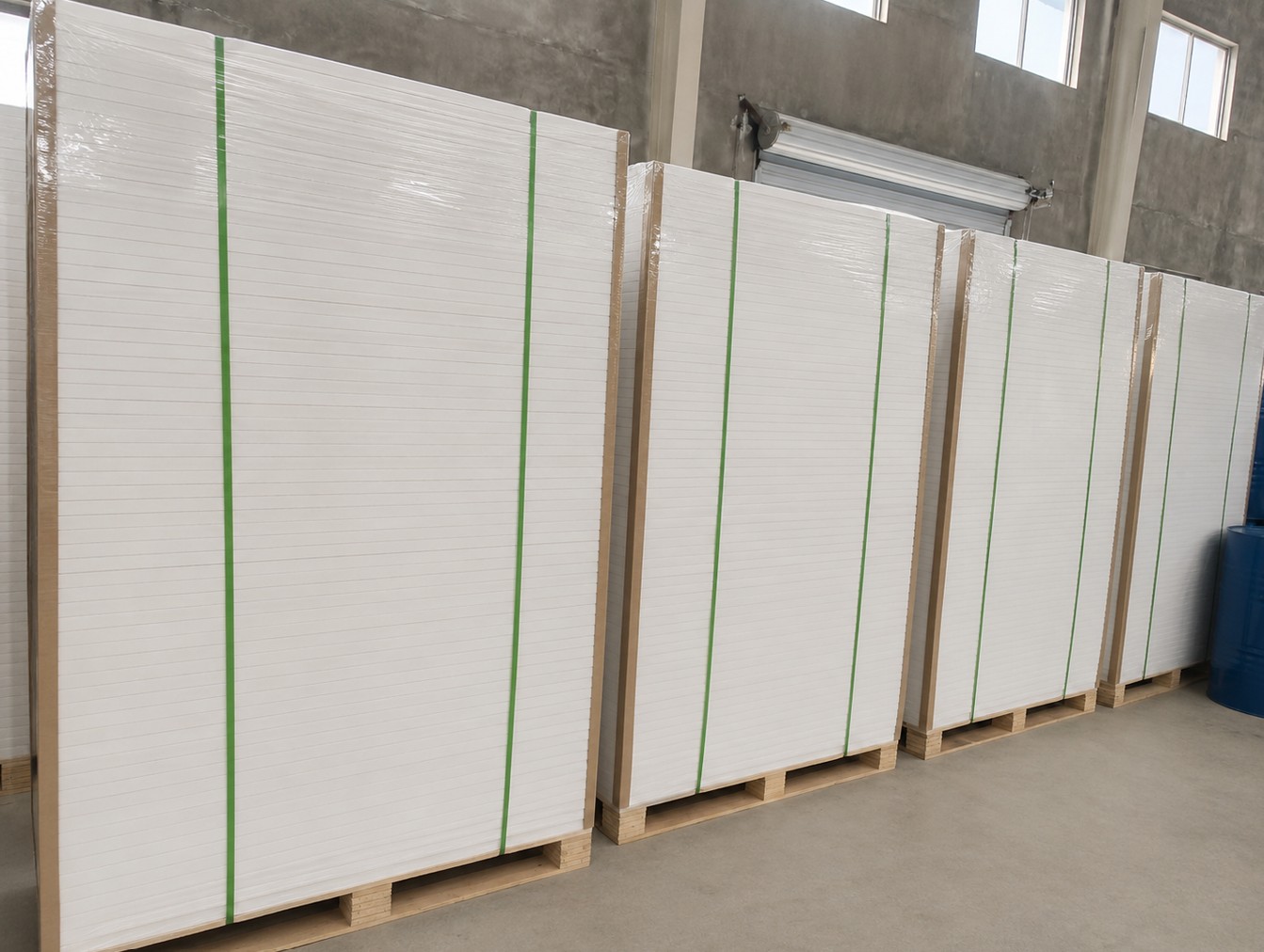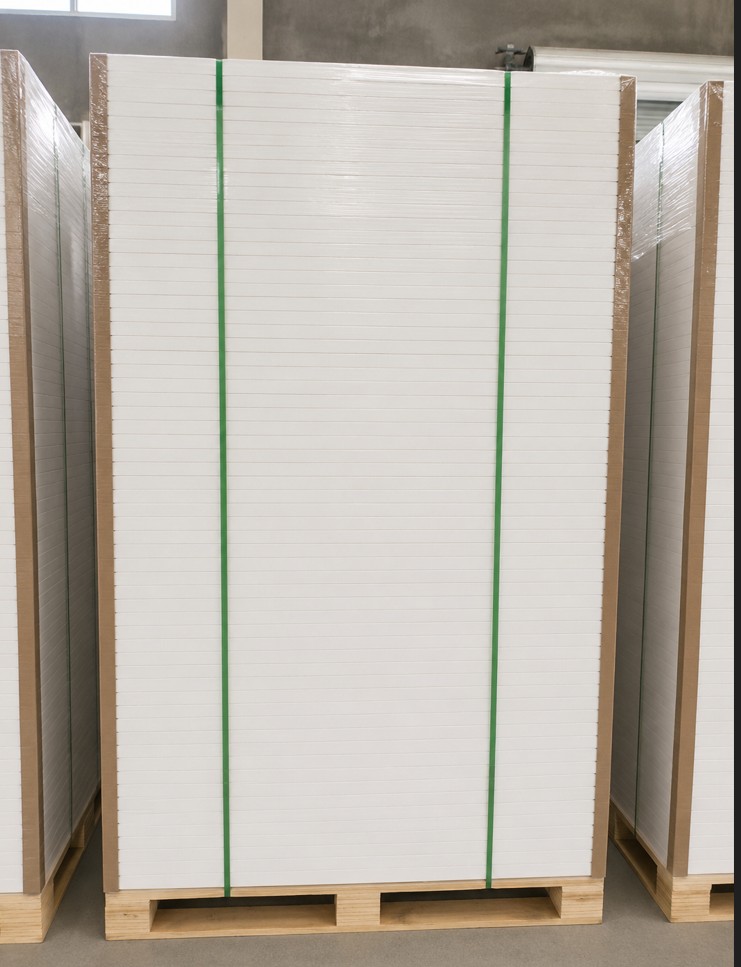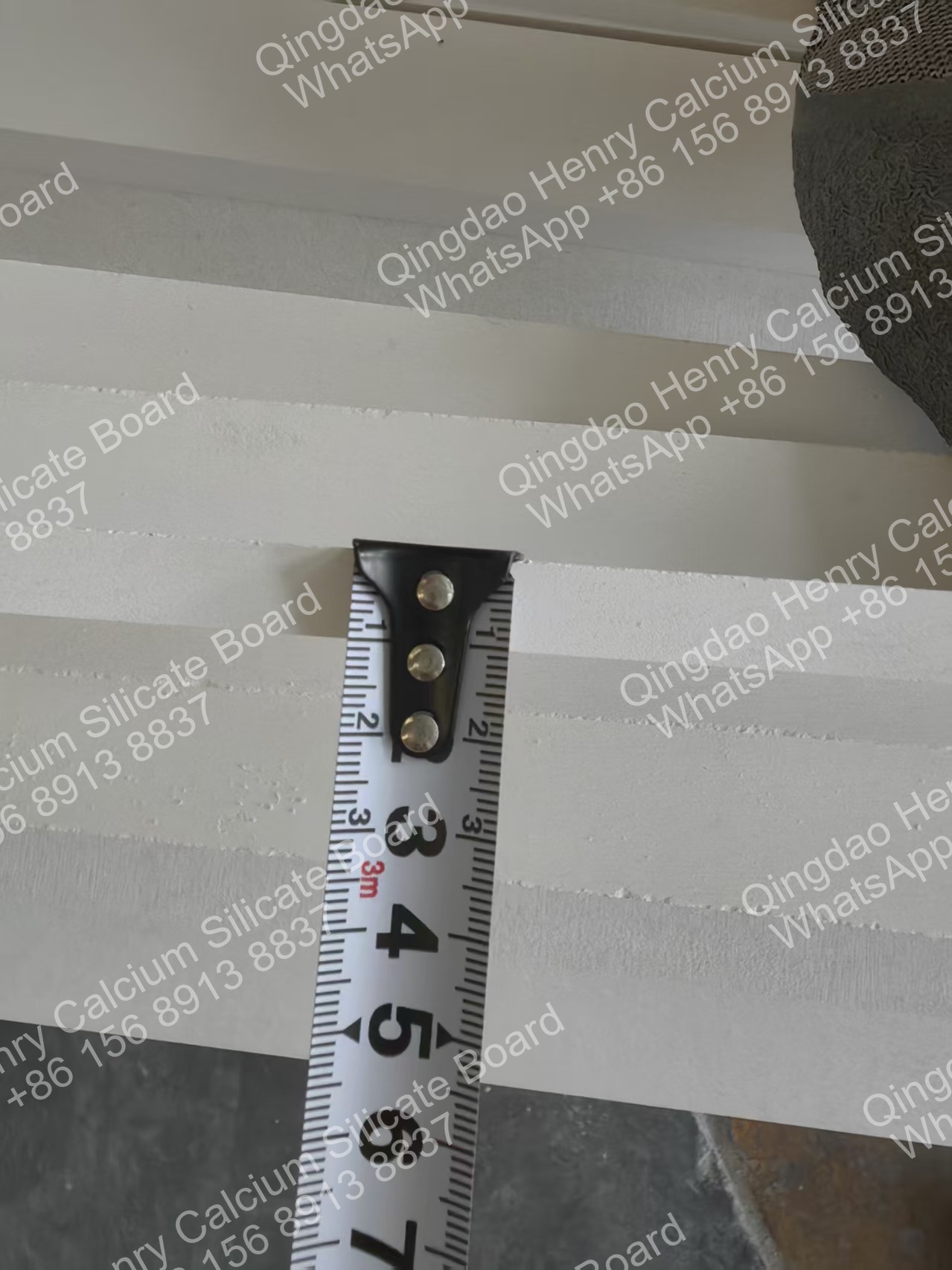
High density calcium silicate board is the structural end of the calcium silicate range — denser, stronger and built to carry mechanical load while still insulating against heat. Where low-density grades focus on saving energy, high-density grades (typically 650–1200 kg/m³) are specified for steel ladle backup, molten metal contact, furnace structures and other heavy-duty positions. This guide explains what high density calcium silicate board is, the grades available, their properties, and how to choose the right one.
What Is High Density Calcium Silicate Board?
It is a rigid, non-asbestos calcium silicate board produced at a higher density than standard insulation grades, giving much higher compressive and flexural strength. Like all calcium silicate board it is autoclaved into a stable crystalline structure (see how calcium silicate board is made), but the pressing stage is tighter, producing a denser, load-bearing material.
- Density range: roughly 650–1200 kg/m³ (40–75 lb/ft³)
- Role: structural insulation, back-up lining, load-bearing supports
- Non-asbestos, A1 non-combustible
- Machinable — cut, drilled and CNC-machined to shape
High Density Grades and Specifications
The table below compares the main high-density grades, with both metric and US units. Values are indicative and confirmed on request.
| GradeDensityMax TempCompressiveFlexuralBest For | |||||
| 650 | 650 kg/m³40.6 lb/ft³ | 1000°C1832°F | ≥ 5.0 MPa725 psi | ≥ 3.0 MPa435 psi | Entry structural / back-up |
| 800 | 800 kg/m³51.2 lb/ft³ | 1100°C2012°F | ≥ 21 MPa3045 psi | ≥ 7.6 MPa1102 psi | High strength, high temperature |
| 850 | 850 kg/m³53.1 lb/ft³ | 1100°C2012°F | ≥ 14 MPa2030 psi | ≥ 6.1 MPa885 psi | Structural load |
| 980 | 980 kg/m³61.2 lb/ft³ | 1100°C2012°F | ≥ 15 MPa2175 psi | ≥ 7.0 MPa1015 psi | Thermal-shock zones |
| 1020 | 1020 kg/m³63.7 lb/ft³ | 1100°C2012°F | ≥ 17 MPa2465 psi | ≥ 8.5 MPa1233 psi | Molten aluminum contact |
| 1200 | 1200 kg/m³74.9 lb/ft³ | 1100°C2012°F | ≥ 23 MPa3335 psi | ≥ 15 MPa2175 psi | Maximum strength |
Continuous service is typically up to 1000°C (1832°F) for the 800–1020 grades, with 1100°C (2012°F) as a peak. The full range, including low-density grades, is on the density selection guide, and the aggregated money page is the high density series.
Key Properties
High Compressive Strength
This is the defining feature. Compressive strength ranges from about 5 MPa (725 psi) at 650 up to 23 MPa (3335 psi) at 1200 — many times that of standard insulation grades — which lets the board carry structural and mechanical load.
Dimensional Stability
High density grades hold their shape under heat and load with low shrinkage, which matters in back-up linings and supports that must stay flat and tight over many thermal cycles.
Temperature Resistance
Most high-density grades are rated to 1100°C (2012°F) peak. They are not a hot-face refractory, but they perform as structural back-up insulation directly behind the refractory.
Machinability
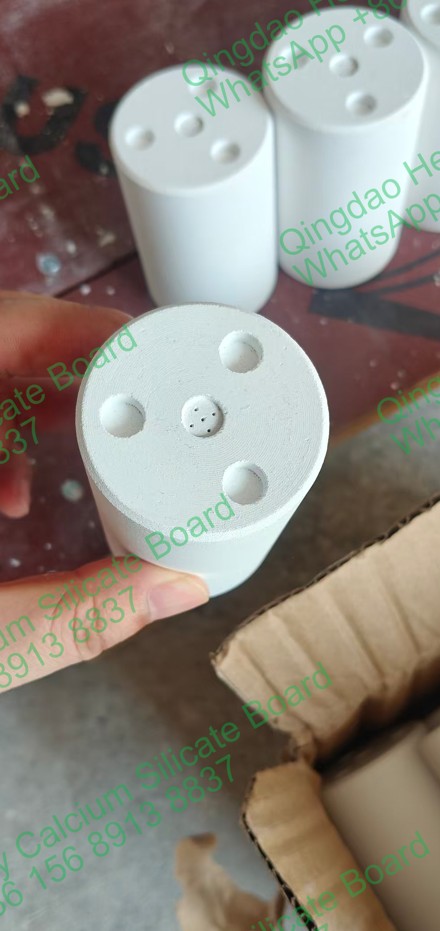
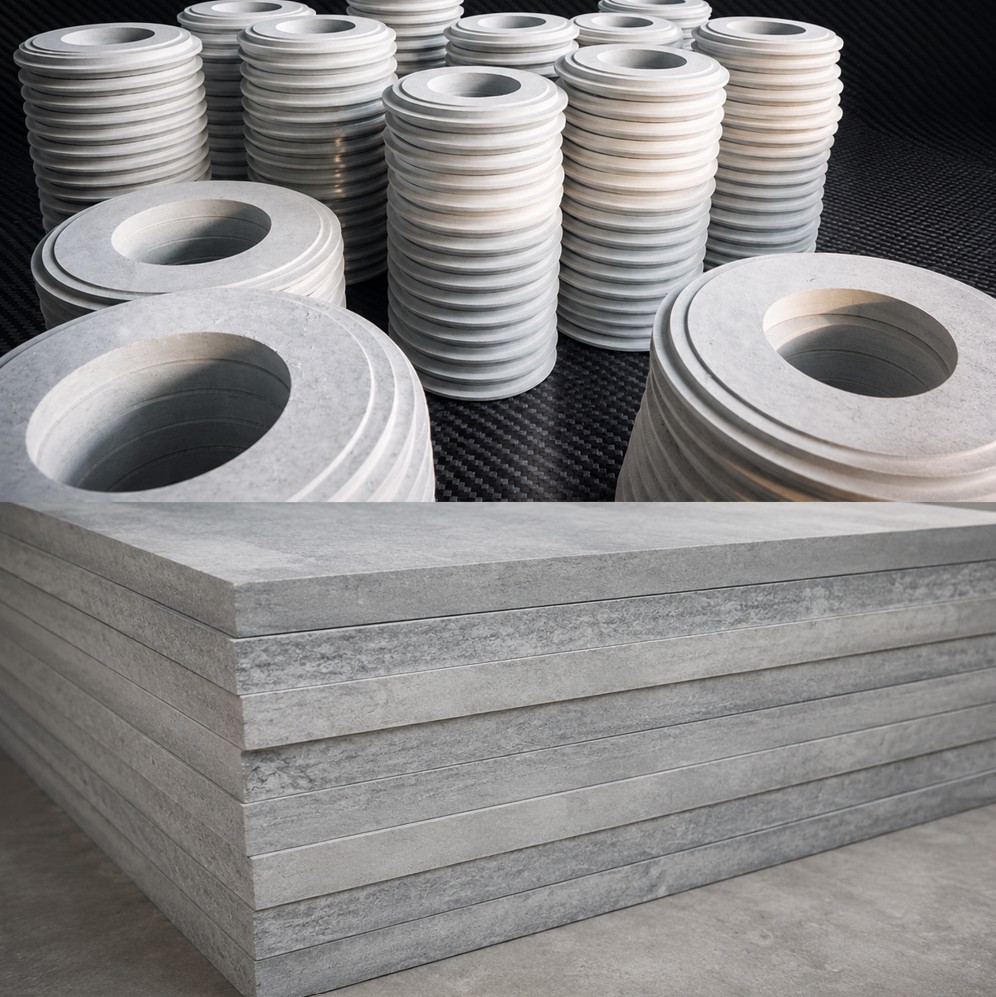
Despite the strength, the boards machine cleanly and can be CNC-cut into pipe sections, rings, discs and custom supports.
Where High Density Calcium Silicate Board Is Used
- Steel ladle and tundish backup — structural insulation behind the refractory lining.
- Molten aluminum contact — the 1020 grade resists aluminum wetting and thermal load.
- Furnace structures and roofs — load-bearing insulation in furnace construction.
- Thermal-shock zones — the 980 grade handles rapid temperature change.
- Foundry and kiln supports — high-load positions in heavy industry.
More uses are covered on the applications page.
High Density vs Low Density — When to Choose Which
The choice comes down to whether the position needs strength or maximum insulation:
- Choose low density (250–400) when the priority is insulation and energy saving, with little mechanical load.
- Choose high density (650–1200) when the board must carry load, resist abrasion or impact, or sit behind refractory as a structural back-up.
High density trades some insulating efficiency for strength, so it is matched to the job rather than used everywhere.
How to Choose the Right High Density Grade
- By load: higher load → higher density. For maximum strength choose 1200; for general structural back-up, 650–850 is often enough.
- By temperature: for peaks near 1100°C (2012°F) use the 800–1200 grades.
- By molten aluminum contact: use the 1020 grade.
- By thermal shock: use the 980 grade.
If you are unsure, send your service temperature, load and position and our team will recommend a grade.
Frequently Asked Questions
What is high density calcium silicate board?
It is a rigid, non-asbestos calcium silicate board made at higher density (roughly 650–1200 kg/m³) for structural and load-bearing insulation, with much higher compressive strength than standard insulation grades.
What densities are available?
Common high-density grades are 650, 800, 850, 980, 1020 and 1200 kg/m³, with custom densities on request.
Can high density calcium silicate board replace refractory brick?
It is not a hot-face refractory. It is used as structural back-up insulation directly behind the refractory to cut heat loss and provide backing, complementing rather than replacing dense refractory at the hottest face.
Which grade has the highest strength?
The 1200 kg/m³ grade has the highest strength, with compressive strength of at least 23 MPa (3335 psi).
Which grade is used for molten aluminum contact?
The 1020 kg/m³ grade is selected for molten aluminum contact because it resists aluminum wetting and high thermal load.
Is high density calcium silicate board asbestos free?
Yes. It is non-asbestos and classified A1 non-combustible.
Can it be CNC machined to custom shapes?
Yes. High-density boards can be CNC-machined into pipe sections, rings, discs and custom supports with tight tolerances. Contact us with your drawing for a quote.